
Montreal’s food scene isn’t built around single cuisines – it’s built around how people gather, share, and move through food spaces. Dim sum tables, dumpling counters, Indian dining rooms, and bubble tea montreal cafés aren’t separate experiences. They form one connected urban food culture shaped by social eating, cultural crossover, and everyday rituals.
From Chinatown to Mile End, Parc-Ex to the Plateau, Montrealers move naturally between these spaces – eating together, sharing dishes, and using food as a social connector rather than just a meal.
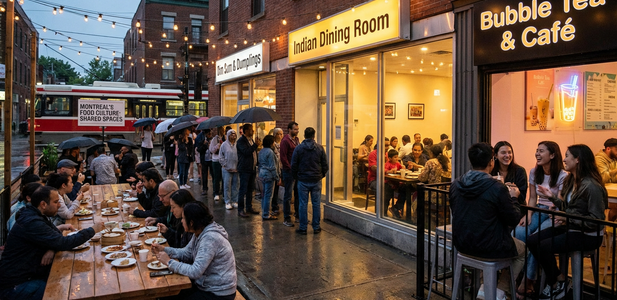
The Core of Montreal’s Food Identity
What unites these food cultures is not geography or origin – it’s structure and behaviour:
- Shared plates
- Group dining
- Informal spaces
- Cultural blending
- Long meals
- Affordable everyday food
- Neighbourhood-based discovery
- Social-first dining
This is not “food tourism.”
This is daily city life.
Dim Sum: Built for Community Dining
Dim sum culture is social by design. It’s not individual meals – it’s shared baskets, rotating plates, and long tables. People eat slowly, talk, order in waves, and treat the meal as an experience rather than a transaction. In dim sum Chinatown Montreal, this culture becomes especially visible as meals are structured around conversation as much as food.
Group ordering, shared plates, long meals, multigenerational dining, casual formality, and a naturally social atmosphere define the experience. A true dim sum restaurant doesn’t just serve food – it creates social space. In Montreal, dim sum Montreal is as much about connection as cuisine, and the idea of best dim sum Montreal is shaped by atmosphere, flow, and shared experience. For locals, best dim sum means community, not just flavour.
What defines dim sum culture in Montreal:
- Group ordering
- Shared plates
- Long meals
- Multigenerational dining
- Casual formality
- Social atmosphere
Dim sum restaurants don’t just serve food – they create social space.
Benefits of Dim Sum (Quick Guide)
Benefit | Why It Matters |
Shared dining | Encourages conversation, group ordering, and social connection |
Portion variety | Lets people try many dishes without heavy meals |
Cultural tradition | Rooted in communal eating and long-table culture |
Flexible timing | Works for brunch, lunch, or extended social meals |
Social atmosphere | Designed for slow eating, talking, and gathering |
Accessibility | Suitable for families, groups, and mixed preferences |
Best Dim Sum Restaurants in Montreal
The Imperial Montreal
A classic dim sum destination known for fresh handmade dishes, a strong social atmosphere, and traditional service style. Ideal for long group meals and shared dining.
Address: 2315h, Trans-Canada Hwy, Pointe-Claire, Quebec H9R 5Z5
Restaurant Chinatown Kim Fung
Located in the heart of Chinatown, this spot offers authentic dim sum, large combo options, and a true communal dining experience.
Address: 1111 Rue Saint-Urbain M05, Montreal, Quebec H2Z 1Y6
Tong Por Resto-Reception
A large banquet-style venue with cart service and classic dim sum traditions, perfect for group gatherings and family meals.
Address: 12242 Blvd. Laurentien, Montreal, Quebec H4K 1M9
Dumplings: Everyday Food for Everyday Life
Dumpling culture in Montreal is not built on spectacle – it’s built on routine. These are lunch stops, late-night meals, student spots, family places, and neighbourhood counters. Affordable, fast, handmade, flexible, and accessible, best dumplings Montreal are daily food, not “event food.” Dumplings Montreal are urban comfort food – practical, social, and woven into daily routines.
Why dumplings matter in the city:
- Affordable
- Fast
- Handmade
- Flexible (steamed/fried/soup)
- Accessible
- Daily food, not “event food”
Dumplings are urban comfort food – practical, social, and woven into daily routines.
Useful Benefits of Dumplings
- Portion control – Easy to eat in small quantities or share across a table
- Versatility – Available steamed, fried, boiled, or in soup form
- Balanced meals – Combine protein, vegetables, and carbs in one dish
- Everyday affordability – Accessible for daily dining, not just special occasions
- Fast service – Ideal for lunch breaks and casual meals
- Cultural variety – Wide range of regional styles and fillings
Best Dumpling Restaurants in Montreal
Sammi & Soupe Dumpling
Famous for Xiao Long Bao (soup dumplings) and consistently high-quality handmade dumplings, with both steamed and fried options.
Address: 1909 Rue Ste-catherine O, Montreal, Quebec H3H 2E8 Canada
Harbin Dumpling
A Mile End staple known for authentic northern Chinese dumplings, wide filling variety, and strong value for money.
Adress: 3829 Saint Denis St, Montreal, Quebec H2W 2M4
Indian Cuisine: Cultural Depth and Shared Eating
Indian restaurants in Montreal represent depth and continuity. From South Indian dosa houses to North Indian kitchens, vegetarian cafés to modern fusion spots, the culture of sharing remains constant. Whether dining at a casual Indian restaurant or a long-established Indian restaurant Montreal institution, the structure remains the same: communal dishes, shared curries, and long social meals.
Common elements include shared curries, communal dishes, tapas-style ordering, cultural storytelling, multi-generational dining, and long table culture. Indian food Montreal is not just flavour – it’s structure, tradition, and social design. From everyday neighbourhood dining to Indian buffet Montreal formats, food becomes a collective experience. The reputation of best Indian restaurant Montreal is built not only on taste, but on atmosphere and social flow, while the idea of best Indian restaurant and best Indian food Montreal reflects both cultural depth and shared dining culture.
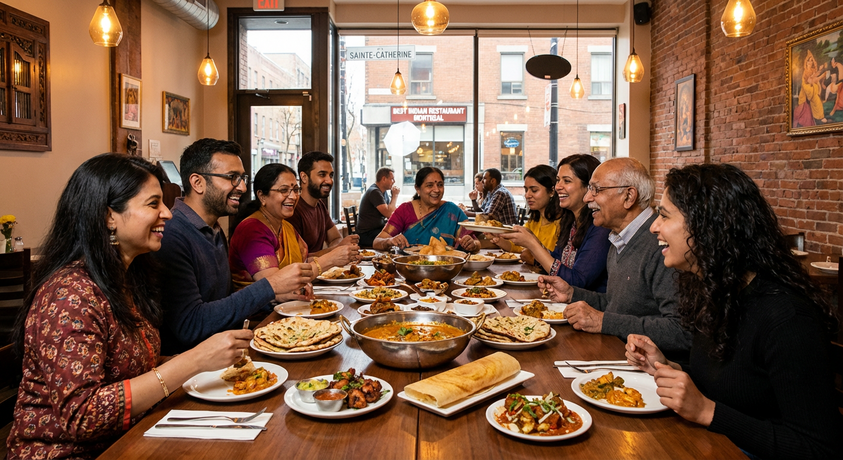
Common elements:
- Shared curries
- Communal dishes
- Tapas-style ordering
- Cultural storytelling
- Multi-generational dining
- Long table culture
Indian dining in Montreal is not just flavour – it’s structure, tradition, and social design.
Useful Benefits of Indian Food
- Nutrient balance – Combines proteins, legumes, vegetables, grains, and healthy fats in one cuisine
- Spice-based health support – Ingredients like turmeric, ginger, cumin, and coriander support digestion and immunity
- Vegetarian-friendly – One of the most diverse cuisines for plant-based eating
- Shared dining culture – Designed for group meals and communal plates
- Customizable heat levels – Easy to adjust spice and intensity for different preferences
- Cultural depth – Food traditions rooted in history, ritual, and regional identity
Best Indian Restaurants in Montreal
Le Taj
A long-established Montreal institution offering traditional Indian cuisine, refined dining, and consistent quality with classic dishes like tandoori and curries.
Address: 2077 Stanley St, Montreal, Quebec H3A 1R7
India Rosa
A modern Indian restaurant known for shareable plates, creative dishes, and a strong social dining atmosphere, blending tradition with contemporary style.
Address: 1241 Avenue du Mont-Royal E, Montréal, QC H2J 1Y2
Dosa Pointe
A go-to spot for South Indian cuisine, especially dosa, offering authentic flavours, family recipes, and accessible everyday dining.
Address: 895 Rue Jean-Talon O, Montréal, QC H3N 1S7
Bubble Tea: The Modern Social Connector
Bubble tea cafés are not meal destinations – they are continuation spaces. They come after dinner, after class, after work, after shopping. In areas known for bubble tea downtown, these cafés function as modern social hubs, extending the city’s social rhythm beyond physical dining spaces.
What bubble tea spaces represent is informal gathering, flexible time use, youth culture, study spaces, post-meal socialising, and community hubs. Bubble tea downtown Montreal doesn’t replace restaurants – it extends social interaction. Daily searches like bubble tea near me and bubble tea places near me reflect how embedded these spaces are in everyday urban routines.
They function as modern social hubs.
What bubble tea spaces represent:
- Informal gathering
- Flexible time use
- Youth culture
- Study spaces
- Post-meal socialising
- Community hubs
Bubble tea doesn’t replace restaurants – it extends social interaction.
Useful Benefits of Bubble Tea
- Social-friendly drink – Easy to share, carry, and enjoy in group settings
- Customizable nutrition – Adjustable sugar, ice, milk types, and toppings
- Energy boost – Tea-based caffeine supports focus and alertness
- Post-meal light option – Functions as a dessert alternative without heavy food
- Wide flavour range – From fruit teas to milk teas, matcha, and specialty blends
- Accessible social space – Affordable and welcoming for daily meetups
Best Bubble Tea Spots in Montreal
Presotea
Known for its in-house tea brewing technology and consistently fresh flavours, Presotea is widely regarded among the best bubble tea Montreal options for quality and consistency.
Address: 10 Rue de la Gauchetiere Ouest, Montreal, Quebec H2Z 1B9 Canada
The Alley
A premium bubble tea downtown Montreal brand famous for handmade tapioca, house-made sugar cane syrup, and carefully crafted specialty drinks.
Address: 1256 Guy St, Montreal, Quebec H3H 2S7
Maison O Thé
Offers a wide variety of bases and toppings, strong flavour combinations, and full customization options for sweetness and texture.
Address: 625, boul. Décarie Montréal, QC H4L 3L2
One Food Flow, Not Separate Categories
Montrealers don’t move through food as categories.
They move through it as experiences:
dumplings → bubble tea → dinner → dim sum brunch → Indian sharing plates → late-night tea
This is a continuous cultural loop, not isolated cuisines.
The City as a Leisure Ecosystem: Offline and Online as One Space
Modern cities no longer exist only in physical spaces. Social life doesn’t end in restaurants, cafés, or public places – it continues in digital environments. In-person gatherings, shared meals, and urban rituals naturally flow into online spaces, forming one connected leisure ecosystem. Today’s city lifestyle is hybrid: physical spaces create the experience, and digital spaces extend it.
How Digital Gambling Spaces Became Part of Urban Lifestyle
Digital gambling spaces have become a natural extension of city culture. After dinners, walks, and social meetups, everyday life continues online through home-based leisure, digital entertainment, and shared virtual experiences. Online leisure is now part of daily urban routines, not a separate world. Physical and digital spaces work together, shaping one continuous culture of connection, habits, and social life.
How These Food Cultures Connect
Culture Type | Social Function | Eating Style | Urban Role |
Dim Sum | Community gathering | Shared plates | Long social meals |
Dumplings | Daily routine food | Individual + shared | Everyday dining |
Indian Cuisine | Cultural continuity | Communal dishes | Social meals |
Bubble Tea | Social extension | Individual drinks | Post-meal space |
They form one system:
Eat together → gather → share → move → continue socially
Montreal’s Real Food Identity
Montreal’s food culture isn’t defined by restaurants – it’s defined by habits. People eat in groups, share dishes, blend cultures naturally, and move through neighbourhoods using food as a social connector rather than just a service. Meals become time spent together, not transactions, and dining becomes part of daily life instead of a special occasion. This isn’t trend-based dining or curated lifestyle culture – it’s urban cultural behaviour shaped by how people actually live, meet, and connect in the city.
Why This Matters
This shared-plate culture builds community in a practical, everyday way. It encourages cultural exchange without forcing it, creates accessible social spaces across neighbourhoods, and strengthens local identity through routine interactions rather than events. Food becomes part of daily urban life, not luxury life – something people use to connect, unwind, and belong, rather than something reserved for special moments or status experiences.
Montreal doesn’t eat in silos.
It eats together.