
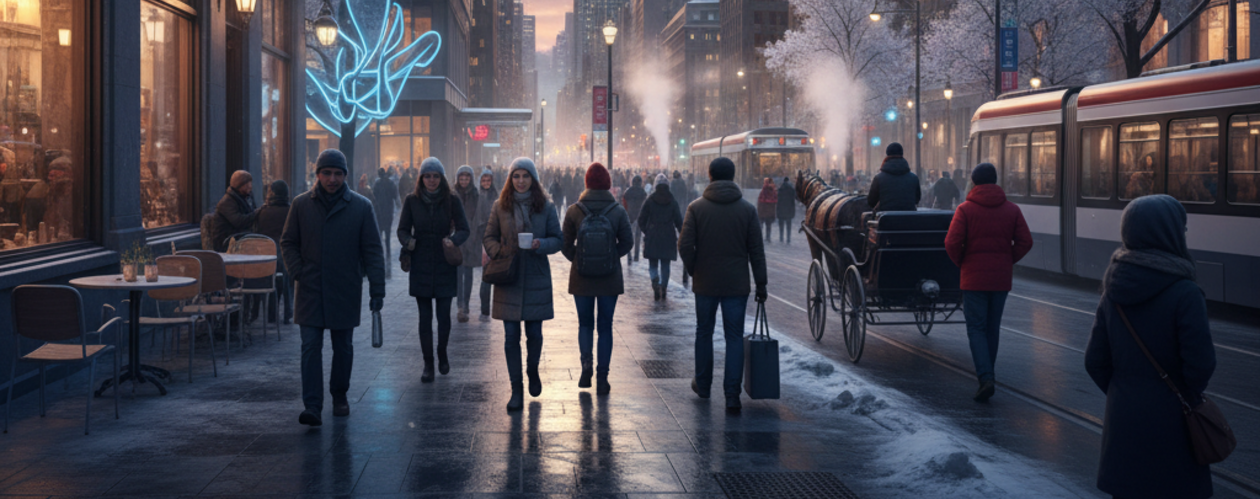
Montreal is a living city where culture, climate, seasons, and daily routines interact to shape urban life, creating a shared rhythm that defines how people live, move, and experience the city.
City life is not built only from events, festivals, and entertainment. It is shaped just as much by the environment people live in – climate, seasons, weather, daily routines, and shared habits. In Montreal, these elements don’t exist separately. Culture and nature interact constantly, creating a unique urban rhythm where events, weather, and everyday life form one connected system.
Montreal is not just a place where things happen – it is a living environment, where culture defines the experience of the city, and climate defines its rhythm.
When the City Becomes a Cultural Stage
In November 2019, Montreal prepared for a unique adult-only event – a Harry Potter-inspired festival that transformed the city into a world of fantasy and imagination. Held on November 15 at the Rialto Theatre on Parc Avenue, the event was designed as a full immersive experience rather than a simple themed party.
The festival experience included:
Themed drinks:
- Boozy Butterbeer
- Polyjuice Potion
- Unicorn Blood
- Hair of the Multi-Headed Dog
- Other magical cocktail creations
Themed food:
- Luna Love’s Pudding
- Ron Family Sweater Cookies
- Butterscotch Beer Popcorn
- Cauldron Cakes
Activities and atmosphere:
- A cobblestone-style alley where guests could choose their wand
- Photo opportunities with real-life characters
- Live entertainment by DJ Dobs and the Potter Party Band
- Interactive games:
- Harry Potter trivia
- Cornhole snitch toss
- Themed competitions and challenges
For one evening, the theatre and its surroundings became a fantasy space where culture, imagination, and community blended into a shared urban experience.
Major Montreal Festivals in 2026: City Life Across the Seasons
Before diving into how culture and climate shape daily life in Montreal, it’s worth looking at the major festivals that already define the city’s rhythm in 2026. These events are not just dates on a calendar – they shape how people experience winter, summer, and everything in between, turning the city itself into a living cultural space.
Winter and Summer Festivals
Igloofest
Igloofest remains one of Montreal’s most iconic winter experiences. Held outdoors at the Jacques-Cartier Pier in the Old Port, the festival brings electronic music into the heart of winter, turning freezing temperatures into part of the atmosphere. In 2026, Igloofest runs from January 15 to February 7, transforming cold nights into social, high-energy gatherings where music, winter culture, and city life meet in one space. It’s not just a concert series – it’s a seasonal ritual for the city.
Montreal Têt Festival
The Montreal Têt Festival brings a different kind of winter energy to the city. Celebrating the Vietnamese New Year, the festival will take place on Sunday, February 8, 2026, at the Grand Quay of the Port of Montreal, starting at 10:00 AM. More than an event, it’s a cultural gathering that blends tradition, community, food, and celebration into Montreal’s winter calendar, adding warmth and meaning to the coldest season of the year.
Festival International de Jazz de Montréal
The 46th edition of the Festival International de Jazz de Montréal takes over the Quartier des Spectacles from June 25 to July 4, 2026. Recognized as the world’s largest jazz festival, it blends international performances with open urban spaces, drawing massive crowds into downtown Montreal. With artists like Diana Krall and Marcus Miller in the lineup, the festival continues to shape Montreal’s identity as a global cultural city every summer.
Just For Laughs (Juste pour rire)
From July 15 to July 26, 2026, Just For Laughs transforms Montreal into a city-wide comedy stage. With hundreds of shows, outdoor performances, and free activities across multiple venues, the festival becomes part of everyday city life, not just an event you attend – it’s something you live through as the city shifts into a shared cultural space of humour, performance, and street life.
Osheaga Music and Arts Festival
Held at Parc Jean-Drapeau from July 31 to August 2, 2026, Osheaga blends music, art, and urban summer culture into one of Montreal’s largest festivals. Spread across multiple stages and spaces, it turns the island park into a temporary city of sound, people, and movement – a seasonal transformation that shows how Montreal’s landscape becomes part of the cultural experience.
2026 Festival Overview
Festival | Dates (2026) | Location | Season |
Igloofest | Jan 15 – Feb 7 | Jacques-Cartier Pier, Old Port | Winter |
Montreal Têt Festival | Feb 8 | Grand Quay, Port of Montreal | Winter |
Montreal Jazz Festival | Jun 25 – Jul 4 | Quartier des Spectacles | Summer |
Just For Laughs | Jul 15 – Jul 26 | Citywide venues | Summer |
Osheaga | Jul 31 – Aug 2 | Parc Jean-Drapeau | Summer |
When Climate Becomes Part of Everyday City Life
Only days after such cultural events, Montreal shifts into another reality – the seasonal one.
In early November 2019, the city prepared for the first major snowstorm of the season. According to weather forecasts, snowfall was expected to begin on Monday afternoon, with the most intense period overnight into Tuesday.
Forecast details:
- 10-15 cm overnight
- Additional 2-4 cm on Tuesday
- Potential total of up to 20 cm in the first week of the season
City impact:
- Installation of winter tires
- Shovels and snow equipment coming out
- Slower traffic during rush hour
- Winter clothing returning to daily routines
- Streets covered in the first “white blanket” of the season
This moment marks the city’s transition from autumn to winter – a shift that affects daily movement, planning, and rhythm of life.
When Winter Becomes a Lifestyle
By the end of December 2019, Montreal experienced the first true winter storm of the season. After a relatively warm and green Christmas, winter fully returned.
Storm forecast:
- Light snow in the morning
- Heavy snowfall in the afternoon and overnight
- 15-20 cm expected by Tuesday
- Additional 5 cm Tuesday morning
- Total accumulation: up to 25 cm
For many residents, this was not only disruption – it was a seasonal reset. Winter in Montreal is not just weather – it becomes part of how people live, move, work, and relax.
Montreal as One Living Ecosystem
Festivals, snowstorms, themed events, seasonal transitions, and everyday routines are not separate stories. They are parts of one urban system.
Montreal operates as a living city:
- Culture shapes experience
- Climate shapes rhythm
- Events shape emotion
- Seasons shape behaviour
- Community shapes identity
City life model:
Layer | Role |
Culture | Creates meaning and experiences |
Climate | Sets rhythm and conditions |
Seasons | Shape habits and routines |
Events | Create shared moments |
Community | Connects people |
A fantasy festival can transform a theatre into a magical world.
A snowstorm can reshape the entire city’s movement.
Winter can redefine leisure, work, and daily life.
Together, they form a single system. Together, these layers shape not only how the city moves and celebrates, but also how its residents seek balance, recovery, and moments of rest within that rhythm.
Forms of Rest in the Rhythm of the City
Life in a large city is shaped not only by festivals, public events, and social spaces, but also by constant movement, noise, seasonal pressure, and environmental intensity. Urban life creates its own kind of fatigue – physical, mental, and emotional. As a result, ways of resting and relaxing become personal rather than uniform. Some people choose public experiences like festivals and cultural events, while others look for quieter, more private forms of leisure. Urban culture is shaped just as much by how people recover, slow down, and disconnect as by how they gather, celebrate, and socialize.
Individual Online Forms of Gaming Leisure
Within this everyday rhythm of city life, individual online forms of gaming leisure also exist, including regulated online casinos operating in Canada under established provincial and legal frameworks. For some people, these are not social or public activities, but personal, home-based forms of recreation – quiet, individual, and self-directed. In this sense, they function similarly to other private leisure activities such as streaming, digital gaming, or online entertainment services. Rather than shaping public city culture, they exist within the personal routines of urban life, becoming one of many ways people choose to relax and unwind in a high-intensity, fast-moving urban environment.
Winter 2026 Outlook: What to Expect in Montreal
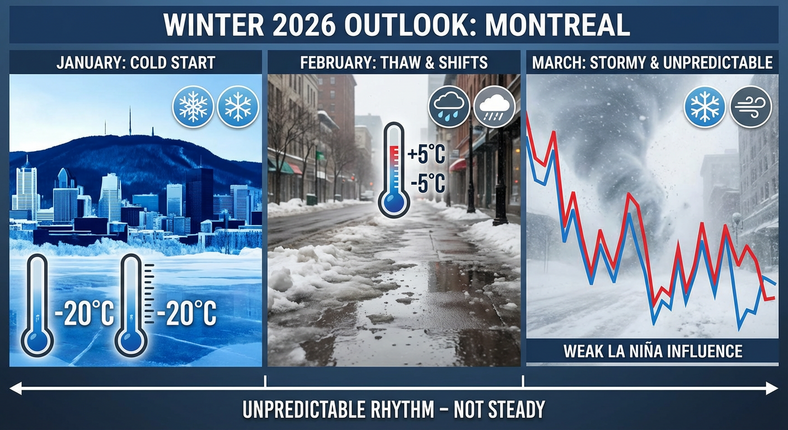
The winter of 2026 in Montreal (January-March) is shaping up to be a season of contrasts rather than stability. Forecasts point to an early cold start, followed by a mid-winter thaw, and then a return to colder, more active, and potentially stormy conditions later in the season. While overall temperatures may be milder than long-term averages, this doesn’t mean a calm winter – powerful snowstorms and sharp cold snaps are still expected, especially in the second half of the season.
By March 2026, conditions are likely to become more intense, with an active storm track bringing heavy, wet snowfall, rapid temperature swings, and periods of melting followed by sudden freezes. A weak La Niña pattern is expected to influence these shifts, creating a winter that feels unpredictable – not constantly extreme, but marked by strong weather events rather than steady conditions.
As these private forms of digital leisure settle into everyday routines, the broader rhythm of city life continues to be shaped by external forces as well – especially the seasonal and climatic patterns that define Montreal’s winter months.
A City Where Culture and Climate Coexist
Montreal is more than news headlines and event listings. It is a living environment where culture and climate exist together, shaping how people experience the city every day.
Magic festivals, winter storms, themed events, snowfall, seasonal traditions, and daily routines are all expressions of the same reality – a city that lives, changes, adapts, and evolves through both human creativity and natural forces.
In Montreal, culture creates the moments, climate creates the rhythm, and together they shape a unique urban way of life.