
Montreal’s modern lifestyle blends immersive culture, nature exploration, digital leisure, and outdoor retreat into a single experience-driven rhythm of urban living.
Montreal has always lived between two worlds – culture and nature, urban life and open space, fast-paced city energy and slow, immersive experiences. Over the past few years, that balance has become increasingly apparent. From large-scale immersive art exhibitions to wildlife encounters along the St. Lawrence to quiet forest campsites just outside the city, the Montreal lifestyle naturally blends culture, exploration, and escape. This guide connects those worlds into one story – not as separate topics, but as different expressions of the same Montreal rhythm: experience the city, then step away from it.
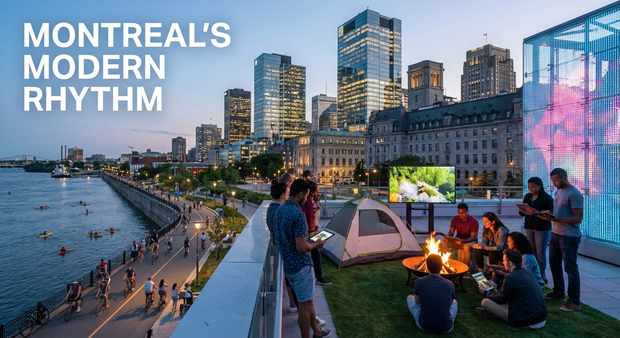
Immersive Art Experiences: From Imagine Van Gogh to Montreal 2026
In 2020, imagine Van Gogh Montreal transformed the city’s cultural scene. Hosted at Arsenal Contemporary Art of Montreal in Griffintown, the exhibition turned classic paintings like Starry Night and Sunflowers into floor-to-ceiling immersive environments, paired with music from Saint Saëns, Mozart, and Bach. Visitors didn’t just view art – they walked through it.
The success of the Van Gogh exhibit Montreal showed something important: Montreal audiences are drawn to experiential culture, not just traditional galleries. The global attention around Montreal Van Gogh exhibitions also helped position the city as a destination for large-scale immersive art, making Van Gogh Montreal part of a wider cultural movement rather than a one-off event.
That same trend continues into 2026:
- Goldschmidt Conference 2026 (July 12-17) at Palais des Congrès brings international science and culture together in one of Canada’s biggest global conferences.
- PHI Centre (2025–2026) presents immersive digital and sensory exhibitions by Josèfa Ntjam, Manuel Mathieu, and Keiken.
- Montreal Museum of Fine Arts (MMFA) expands Indigenous and historical exhibitions in the Claire and Marc Bourgie Pavilion.
- McCord Stewart Museum continues large-scale fashion and cultural exhibitions like Africa Fashion.
Montreal’s cultural identity is no longer only about observation – it’s about participation, immersion, and experience. As experience becomes central to city life, that same desire for immersion naturally carries people beyond galleries and venues, outward toward open landscapes, rivers, forests, and living nature.
From Art Spaces to Open Spaces: Why Montrealers Look to Nature
That same desire for immersion doesn’t stop at museums. After city experiences, Montrealers naturally look outward – toward rivers, forests, and wildlife. Quebec’s geography makes this easy: within a few hours of the city, you can move from concrete streets to whales, mountains, lakes, and forests. This is where Montreal culture and nature connect: experience-driven living – whether it’s art, wildlife, or wilderness.
Leisure Without Distance: From Places to Platforms
Modern leisure is no longer tied to location. Experience now moves between physical spaces and digital environments, public venues and private moments. Culture, nature, and rest are no longer separate categories – they form a single lifestyle rhythm.
Galleries, rivers, forests, and home spaces all serve the same purpose: creating mental space and emotional balance. Platforms don’t replace places – they extend them. Leisure changes over time, energy, and context, becoming part of a continuous, experience-driven lifestyle.
Home-Based Digital Gambling in a Modern City
Home-based online gambling is now a natural part of urban life. It exists alongside museums, parks, and travel as a quiet form of personal downtime. Digital spaces shape evening routines and private moments without competing with real-world experiences.
Regulated online entertainment, including online casino environments, fits into this pattern as optional, home-based leisure. It reflects modern values of flexibility, autonomy, and balance – where public experiences and private digital spaces coexist within the same everyday rhythm. Within this fluid rhythm of modern living, the home becomes another essential space of experience, where digital environments quietly shape everyday leisure and personal downtime.
Whale Watching Near Montreal: Nature as a Living Exhibition
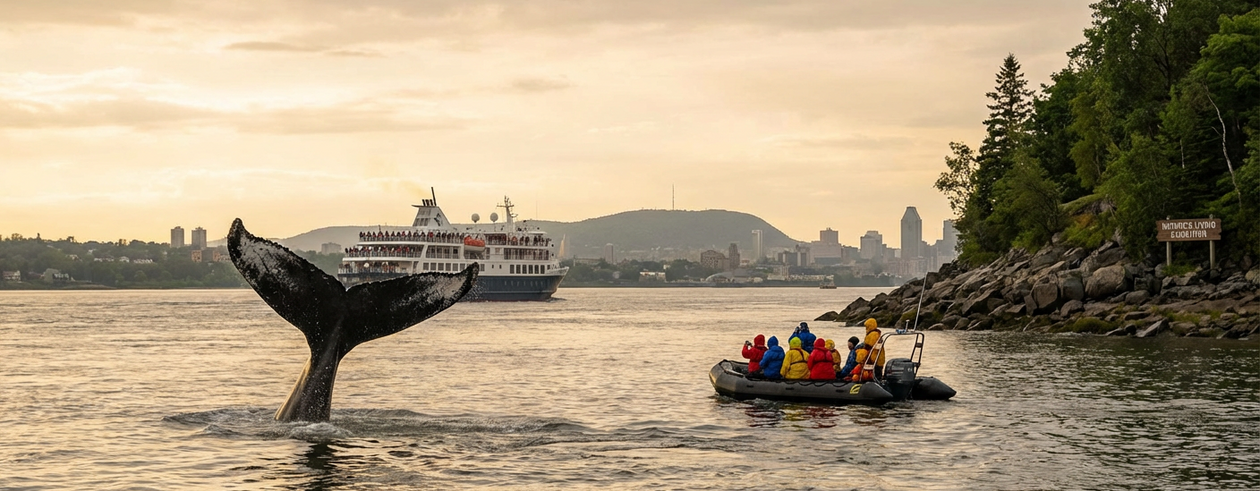
Quebec’s maritime regions offer some of the best whale watching in the world. From May to October, up to 13 species of cetaceans appear in the St. Lawrence River, including blue whales, belugas, humpbacks, and minke whales. For many visitors, the idea of seeing a whale in Montreal waters feels unreal, yet Montreal whales are part of the wider St. Lawrence ecosystem that defines the region’s natural identity.
Experiences connected to whale watching Montreal and whale watching Montreal Quebec don’t feel like traditional tourism – they feel like entering a living landscape. From river excursions to coastal expeditions, whale watching Quebec offers encounters that are raw, unpredictable, and unscripted, making every whale Montreal experience different from the last.
Top experiences include:
- Zodiac Adventure – High-speed zodiac tours combined with wildlife parks and historic sites.
- Full-Day Cruises from Quebec City – Panoramic routes, zodiac or large observation boats.
- Paradis Marin – Shore-based whale watching for calm, land-based viewing.
- VIP St-Laurent Lounge – Luxury cruise experience with private decks and dining.
- Kayaking with Belugas – Multi-day expeditions alongside marine life.
Here, nature becomes the exhibition – unpredictable, unscripted, and real.
Escaping the City: Campsites as Montreal’s Quiet Counterbalance
After art and adventure, the final layer of Montreal life is retreat. Camping around Montreal isn’t just recreation – it’s reset culture. Within 30 minutes to 2 hours, you can trade traffic for forests and screens for lakes, whether you’re looking for camping near Montreal, relaxed camping Montreal escapes, or quieter forms of Montreal camping in surrounding regions.
Classic favourites:
- Oka National Park – Forest camping and river beaches
- Mont‑Tremblant National Park – Multi-activity wilderness
- Mont‑Orford National Park – Lakes, hills, and trails
- Pin d’Erable – Family‑friendly, waterside escape
Top-rated options for 2026:
- Camping Choisy (45 min west) – Family-focused forest site
- Îles‑de‑Boucherville National Park – Closest nature escape to downtown
- Camping Alouette – Mont St‑Hilaire views
- Parc Omega – Wildlife‑adjacent nature stays
Top-rated options for 2026 include places often listed as the best camping near Montreal, with well-known campgrounds near Montreal and established Montreal campgrounds offering structured comfort alongside nature. This includes family-oriented sites, forest retreats, and wildlife-adjacent stays that define modern camping Montreal culture and growing interest in camping proche de Montreal experiences.
One City, One Rhythm
What connects all of this isn’t location – it’s behaviour.
Montrealers move between:
- Immersion (art, culture, exhibitions)
- Exploration (wildlife, rivers, travel)
- Retreat (camping, forests, silence)
This isn’t tourism – it’s lifestyle design.
The city offers stimulation.
Nature offers grounding.
Together, they create balance.
Montreal doesn’t separate culture from nature – it layers them. You don’t choose between city life and escape. You cycle through both.
That’s what makes Montreal unique: a place where immersive art, wild landscapes, and quiet forests aren’t separate experiences – they’re part of one continuous way of living.